Why Optimize Transfers
Every loyalty program values its points differently. Chase Ultimate Rewards might be worth 2 cents per point, while Flying Blue miles are worth 1.2 cents. When you transfer 50,000 Chase points to Flying Blue at a 1:1 ratio, you’re moving $1,000 in value into $600 of Flying Blue miles — on paper, you just lost $400.
But that’s only half the story. If you use those 50,000 Flying Blue miles for a business class ticket that would cost $3,000 in cash, your effective redemption value is 6 cents per point — three times what the points were “worth” sitting in your Chase account. That’s why optimization matters.
Not All Transfer Options Are Equal
Section titled “Not All Transfer Options Are Equal”When multiple ways exist to move points into a destination program, the costs can vary dramatically:
- Direct transfers — One hop, usually 1:1 ratio, fast settlement. Often the best option, but not always available.
- Multi-hop transfers — Transfer through an intermediate program. More steps and potentially unfavorable ratios, but sometimes the only way.
- Bonus-boosted transfers — A normally mediocre transfer option becomes the best one during a transfer bonus promotion (e.g., 25% bonus on Amex → Flying Blue).
The optimizer evaluates all of these simultaneously and shows you the true cost of each path.
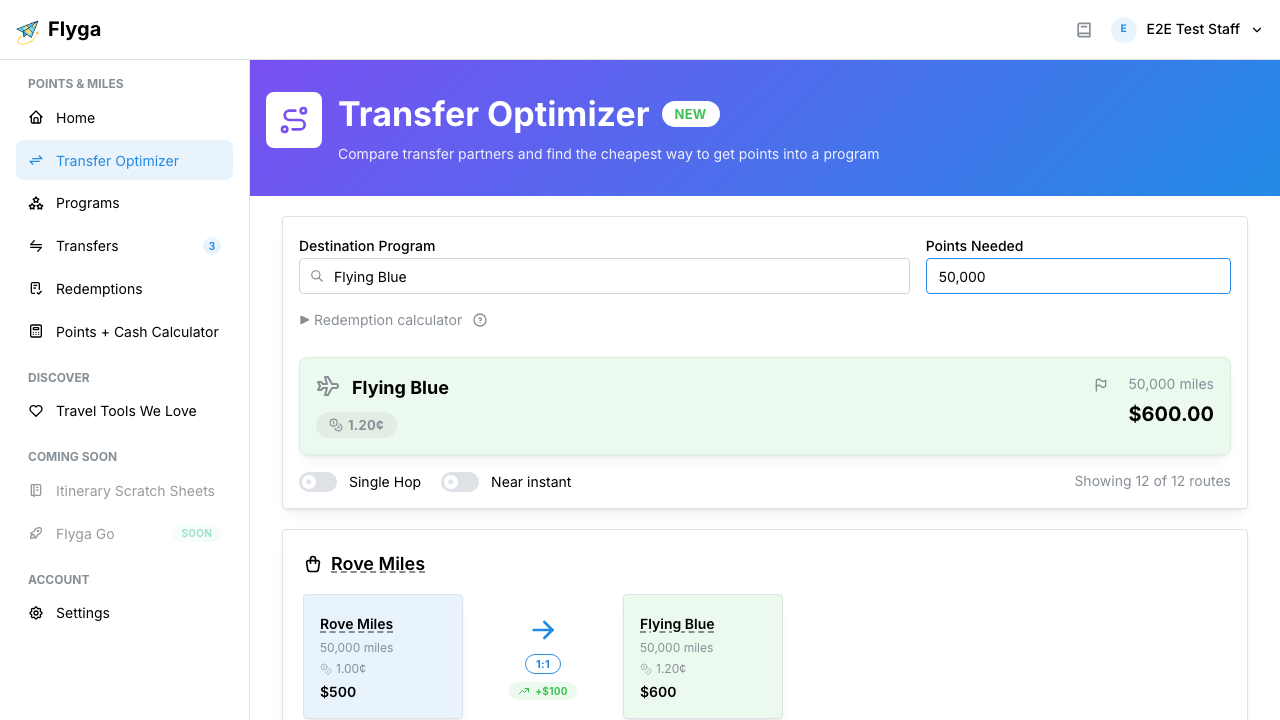
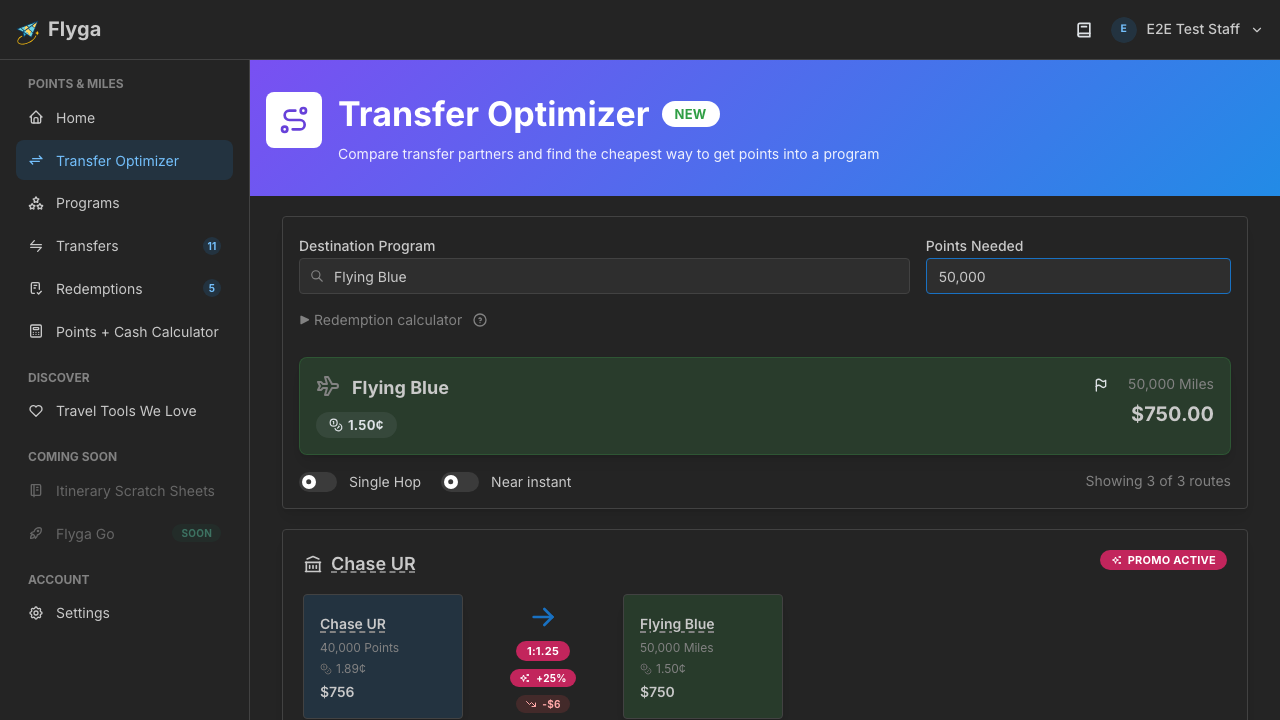
What the Optimizer Calculates
Section titled “What the Optimizer Calculates”For every transfer option, the optimizer shows you:
- Transfer ratio — How many source points you need per destination point (e.g., 1:1, 2:1, or 1000:333)
- Source CPP — The baseline cents-per-point valuation of your source program
- Destination CPP — The baseline valuation of the destination program
- USD value at each stage — Dollar value of your points before and after transfer
- Value change — The net gain or loss from this specific transfer option
- Settlement time — How long the transfer typically takes
These numbers give you a complete picture before you commit a single point.
When to Use the Optimizer
Section titled “When to Use the Optimizer”Before every transfer. Even if you think you know the best transfer option, checking the optimizer takes seconds and can surface options you didn’t consider:
- A new transfer partnership you weren’t aware of
- An active bonus promotion that changes the math
- A multi-hop transfer that’s actually cheaper than the direct transfer
For a hands-on walkthrough of the optimizer interface, see Using the Transfer Optimizer. To go deeper on how to read the results, continue to Understanding Transfer Options and Value.